
Why Do Kids’ Closets Get Messy So Quickly, and What Can Help?
Adam Bender | October 19, 2026
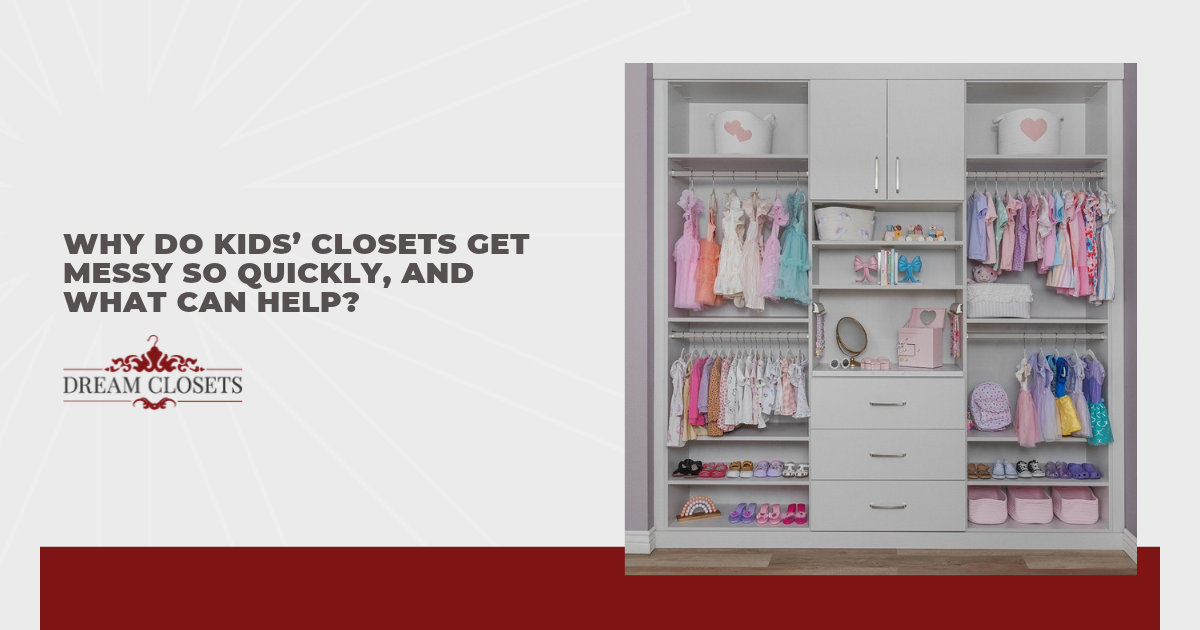
Kids' closets can look tidy at bedtime and end up covered in clothes before school the next morning. Your child pulls out a favorite shirt, shifts a pile to find matching pants, and leaves the rejected outfit on the floor. You might straighten everything again, only to repeat the same cleanup tomorrow. If the mess keeps returning, the way the closet works during everyday use deserves a closer look.\
A closet that’s easy for you to organize may still be difficult for your child to manage. Putting something away can take more effort than you realize, especially when the storage doesn’t match your child’s abilities. Before planning another big cleanup, look at the point where getting dressed or putting clothes away starts to break down. Identifying the obstacle gives you a more useful starting point than another reminder to tidy up.
These common sources of clutter offer clues to making kids' closets easier to use and maintain:
- Too many clothes competing for space
- Everyday storage outside your child’s reach
- Unclear homes for different belongings
- Too many steps to put things away
- No clear place for clothes between wears
- A layout your child has outgrown
- Cleanup without a predictable routine
Let’s look at why each problem leads to recurring mess and what you can change to make daily cleanup more manageable.
Too Many Clothes Competing for Space
Clothes your child no longer wears can take up a surprising share of the closet. A shirt that’s too small may stay tucked beneath current favorites, while an unworn gift still occupies a hanger. As these pieces accumulate, your child has less room to sort through everyday choices without disturbing something else. Even freshly folded stacks can unravel when pulling out one pair of shorts drags several others along.
Start by reviewing which clothes fit your child and get worn regularly. Set aside outgrown pieces for donation or storage, and separate seasonal clothing that doesn’t need to be within daily reach. You can also store next-size purchases apart so they don’t get mixed into the current wardrobe. If your child consistently avoids an item, find out why before giving it space among the everyday options.
I’d judge how full a drawer should be by how easily your child can return something to it. A drawer that closes only after you press down the contents leaves very little room for an imperfect fold. Leave enough space for clothes to move without requiring your child to rearrange the entire drawer. With fewer unused pieces in the way, getting dressed is less likely to undo your organizing work.
Everyday Storage Outside Your Child’s Reach
Your child may know exactly where a jacket belongs but still be unable to reach its hanger. Pulling it down might be possible, while lifting it back onto a high rod requires your help. The jacket then lands on a chair or the closet floor until you’re available. An arrangement that works at your height can leave your child dependent on you for everyday cleanup.
Check what your child can comfortably reach while standing on the floor. Everyday clothing should be accessible without climbing, stretching, or pulling down items stored overhead. Pay attention to drawer access too, since reaching the handle doesn’t necessarily mean your child can see and retrieve what’s inside. Reserve upper storage for belongings you manage, such as keepsakes or clothing saved for a later season.
For a professionally designed closet, make your child’s current reach a starting point for everyday storage placement. A lower hanging rod can give your child access to frequently worn clothes, while shelves at a suitable height keep other essentials within reach. Ask the designer to consider how your child will return each item as well as take it out. Your child will still need guidance, but an accessible setup gives those reminders a task they can actually complete.
Unclear Homes for Different Belongings
“Put your clothes away” is harder to follow when the destination changes with each cleanup. If pajamas share a drawer with shirts one week and move beside socks the next, your child has to guess where they belong. An empty shelf can become the easiest answer, even if you intended it for something else. Consistent categories give your child a clear place to return each item.
Choose broad groupings your child can recognize, such as tops in one drawer and bottoms in another. You don’t need separate categories for every fabric or occasion, especially if the distinctions require your explanation. Ask your child where they’d look for a particular piece of clothing, and use the answer to check whether your groupings make sense. Agree on a location for each category before adding labels.
Simple words or pictures can make those locations easier to remember. A picture of socks on a drawer front gives a child who isn’t reading yet a useful clue about its contents. Match each label to what actually belongs there, and update it if you change the arrangement. Once the categories are familiar, your child has a clearer answer to “Where does this go?”
Too Many Steps to Put Things Away
Even with everything within reach and clearly labeled, putting clothes away can involve more work than your child can manage. Returning a pair of shorts might require removing a stacked container, lifting its lid, and folding the shorts to fit. Your child may complete the first step, then leave the rest unfinished when something interrupts. Look at the full sequence involved in returning an item to understand where the task gets difficult.
For everyday play clothes, I put ease of use first: Can your child manage the storage method without your help? A simple fold may be enough for T-shirts, while socks can go directly into an open drawer compartment. Removing unnecessary lids also eliminates a step for frequently used items that don’t need covered storage. You can still keep clothes tidy without requiring the same level of precision for every garment.
Try walking through the put-away process with your child using a few clean pieces of clothing. Notice which actions require you to step in, and consider how you could simplify them. If a particular folding method causes frustration, practice it separately while keeping daily cleanup manageable. A shorter sequence gives your child fewer chances to get stuck before the item is back where it belongs.
No Clear Place for Clothes Between Wears
A pair of pajamas left after breakfast doesn’t always belong in the same place as a muddy soccer uniform. Yet both can end up on the closet floor when your child isn’t sure what to do with them. Clean clothes tried on and rejected may join the pile, making it harder to tell what needs washing. You can prevent some of this confusion by giving clothes a clear destination as soon as they come off.
Use three simple destinations to help your child decide what happens next:
- Dirty Clothes: Put clothing that needs washing directly into an accessible hamper.
- Clothes Suitable for Another Wear: Give items you’ve agreed can be worn again a designated hook or small basket.
- Clean Tried-On Clothes: Return unworn outfit choices to their usual drawer or hanger so they stay available.
Keep the space for rewearable clothing small enough that it doesn’t become another place to abandon outfits. My preference is a spot with room for only a few pieces, which makes an accumulating pile easier to notice. Help your child decide what’s suitable for another wear when the answer isn’t obvious. Clear destinations make it easier to preserve clean clothing and keep laundry out of the daily wardrobe.
A Layout Your Child Has Outgrown
The arrangement that held your child’s preschool wardrobe may struggle with the clothes they wear a few years later. Longer shirts can brush the shelf below a hanging rod, while larger folded pieces need more space between shelves. You might notice clothes bunching at the bottom of a hanging section even after removing everything that no longer fits. These problems point to a layout that needs adjustment to suit the current wardrobe.
Look at where the size or shape of your child’s clothing conflicts with the available space. A section designed for short garments may now need more hanging clearance, especially for dresses or longer jackets. Your child may also need a different balance of hanging space and drawers as school clothing replaces smaller play clothes. Use the wardrobe you’re storing now to guide changes, while allowing room for likely future needs.
Ask a professional closet designer how adjustable components could support those changes. Shelves that can be repositioned and hanging rods with planned adjustment options can make kids' closets more adaptable as clothing sizes change. Have the designer explain which parts can move and which dimensions will remain fixed. You’ll have a clearer sense of how the closet can accommodate the next stage before its original arrangement becomes a daily obstacle.
Cleanup Without a Predictable Routine
Small unfinished tasks can build up between major closet cleanups. Your child might leave one outfit out before school, then add another the next morning. By the weekend, putting everything away takes more time and direction than either outfit would have needed on its own. A predictable reset gives your child a regular chance to finish those tasks before the pile grows.
Choose a moment that already fits your household, such as before your child puts on pajamas. Keep the expectation specific enough that your child knows what finishing looks like. “Put the clothes on the chair where they belong” gives clearer direction than “Clean your closet.” Stay nearby at first if your child needs help following through, and gradually reduce reminders as the routine becomes familiar.
For me, the useful measure is how much of the reset your child can complete with the guidance they need. You may need to shorten the task on busy evenings or work alongside them after a disrupted week. If the same step keeps getting skipped, ask what makes it difficult before adding more reminders. A routine you can return to after an off day has a better chance of becoming part of everyday life.
Conclusion
Keeping kids' closets organized gets easier when putting things away feels manageable for the child using the space. You’ll still find an abandoned outfit occasionally, especially on a rushed morning. What matters is that your child knows where it belongs and can return it with less help as they learn. Progress shows up in those small moments when you no longer have to finish the job.

QUICK LINKS
CONTACT INFO
Dream Closets LLC
404 E Wigwam Blvd,
Litchfield Park, AZ 85340
Phone
SCHEDULE A CONSULTATION
Contact us, and we will come out and discuss your project free of charge.