
How to Organize a Shared Kids’ Closet
Adam Bender | March 2, 2026
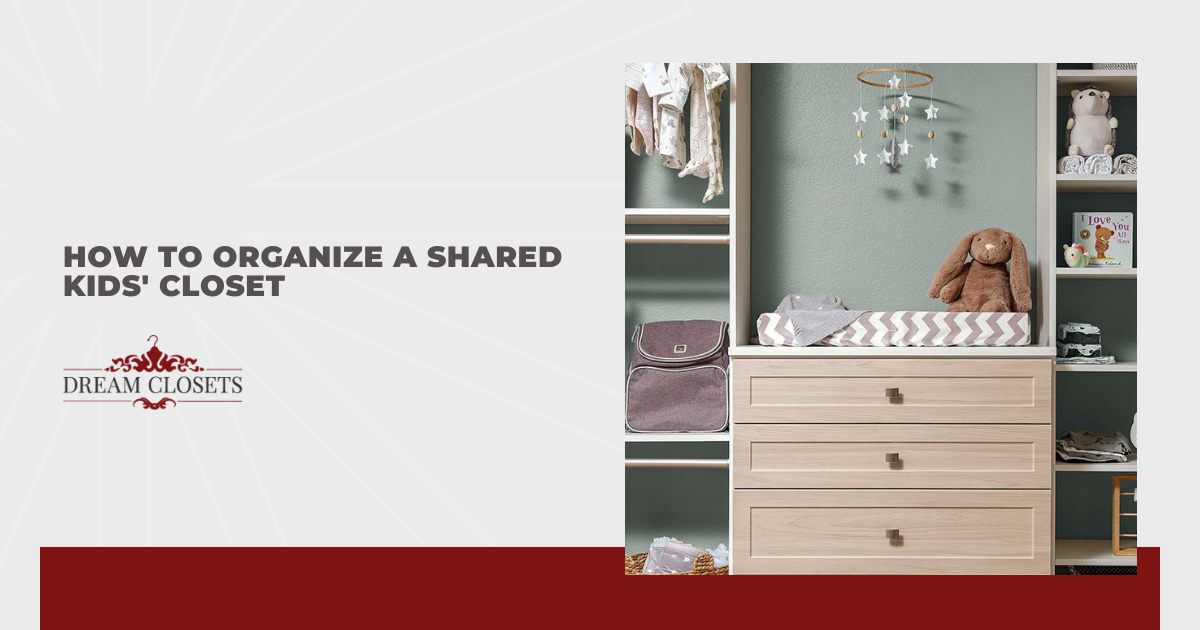
Sharing a kids’ closet sounds simple enough, until you’re trying to fit two wardrobes into one small space. Clothes pile up faster than you expect, and somehow there are always shoes where they don’t belong. Without a clear system, the closet can turn into a daily source of frustration.
It doesn’t take a huge space to make things work. When each child has a defined spot and the layout makes sense for their height and routine, everything feels more manageable. A few thoughtful changes can turn that cramped closet into a space that actually helps your mornings run smoothly.
Here’s the simple framework I recommend when organizing a shared kids’ closet:
- Clear out the entire kids’ closet first
- Create clearly defined spaces for each child
- Maximize vertical space with double-hanging rods
- Choose adjustable shelving that grows with your kids
- Keep small items contained with clear bins and labels
- Limit the closet to the current season
- Set up individual shoe storage for each child
- Install hooks for everyday essentials
- Keep the system simple and easy to maintain
Keep reading, and I’ll walk you through how to put each of these ideas into action in a way that feels practical and easy to maintain.
Clear Out the Entire Kids’ Closet First
The most effective way to organize a shared kids’ closet is to empty it completely before making any changes. I’ve found that seeing everything outside the closet makes it much easier to evaluate what truly belongs in the space. Once everything is visible, you can make clearer decisions about what goes back in.
As you sort, move through these categories:
- Keep: These are the pieces that currently fit, get worn regularly, and are appropriate for the season. Returning only these items to the closet prevents overcrowding and keeps daily choices simple.
- Donate: Clothing that still fits but rarely gets worn can be passed along. Removing these pieces creates breathing room and makes the closet easier to manage.
- Store: Out-of-season or sentimental items can be boxed and labeled for another time. Keeping them outside the main closet ensures the everyday space stays functional.
- Discard: Worn-out, stained, or damaged items that can’t realistically be reused should be removed. Holding on to them only adds unnecessary bulk to the closet.
Before reinstalling clothing, take a few minutes to measure the height, width, and depth of the space. Knowing these dimensions allows you to plan rods and shelving intentionally. A clean slate makes it much easier to build a kids’ closet system that works long term.
Create Clearly Defined Spaces for Each Child
When siblings share a closet, clearly defined zones prevent confusion and daily mix-ups. Even small visual boundaries can dramatically reduce frustration. The goal is to make it instantly clear what belongs to each child.
Here are a few practical ways to divide the space:
- Divide the Closet by Side: Assign one child the left side and the other the right side to create a simple visual split. This works especially well in reach-in closets with a single long rod.
- Separate by Hanging and Shelving Sections: One child can use the hanging rod while the other primarily uses shelving or drawers, depending on wardrobe needs. This approach works well when ages and clothing types differ.
- Use Color Coding or Name Labels: Matching hangers, bins, or shelf labels in specific colors reinforces ownership. Clear labeling eliminates guessing and helps kids return items to the right spot.
Defined sections create structure without making the closet feel rigid. When each child knows exactly where things belong, cleanup becomes more manageable.
Maximize Vertical Space With Double-Hanging Rods
Children’s clothing rarely requires full-length hanging space, which makes vertical storage an opportunity you don’t want to overlook. Adding a second hanging rod instantly increases capacity without changing the footprint of the closet. I often recommend this solution because it’s one of the simplest ways to improve function without a full redesign.
Place frequently worn items on the lower rod where they’re easy to reach. The upper rod can hold dress clothes or pieces that aren’t used as often. Using the full height of the closet keeps it organized and efficient.
Choose Adjustable Shelving That Grows With Your Kids
Adjustable shelving allows the kids’ closet to evolve as clothing sizes and storage needs change. I’ve seen how quickly fixed shelving can become limiting as children grow taller and wardrobes shift. Being able to reposition shelves keeps the layout functional year after year.
Keep everyday essentials within easy reach for younger children. Higher shelves can store keepsakes, memory boxes, or items used less frequently. A flexible shelving system supports both growth and organization.
Keep Small Items Contained With Clear Bins and Labels
Small items are often what make a shared kids’ closet feel messy. Socks, accessories, and seasonal extras can easily spread across shelves if they don’t have clear boundaries. Containment keeps these categories under control.
Use bins to organize items like these:
- Socks and Undergarments: Keeping these in labeled bins or drawers prevents them from mixing between siblings. Clear containers make it easy to see when supplies are running low.
- Hair Accessories and Jewelry: Headbands, clips, and small accessories stay organized when grouped together in one designated container. This prevents them from getting lost in larger drawers.
- Seasonal or Activity Gear: Swimwear, sports accessories, or dance items should have their own clearly labeled bin. Grouping these items keeps them accessible without cluttering everyday clothing space.
When categories are simple and visible, maintenance becomes easier. I’ve seen how this small adjustment alone can dramatically improve daily organization.
Limit the Closet to the Current Season
An overfilled closet feels cramped and difficult to manage. Keeping only in-season clothing in the kids’ closet creates breathing room and simplifies daily outfit choices. Extra space makes the closet feel more organized immediately.
Store off-season items in labeled bins outside the main closet area. When I work with families, seasonal rotation is often the quickest way to improve function without adding new storage. This routine keeps the closet focused on what’s actually wearable.
Set Up Individual Shoe Storage for Each Child
Shoes can quickly take over the floor of a shared closet if they don’t have a designated space. Assign each child a specific shelf, cubby, or rack so every pair has a clear home. Defined storage eliminates confusion and reduces clutter.
I’ve noticed that limiting the number of shoes kept in the closet makes maintenance much easier. Keep shoe storage low and accessible so kids can put pairs away on their own. A simple structure keeps the floor clear and manageable.
Install Hooks for Everyday Essentials
Backpacks, jackets, and hats don’t always belong on the main closet rod. Installing sturdy hooks inside or near the closet creates a convenient drop zone for daily-use items. This prevents heavier pieces from crowding hanging sections.
I recommend placing hooks at heights your kids can reach comfortably. Easy access encourages them to hang items up instead of leaving them on the floor. Small adjustments like this improve the overall function of the kids’ closet.
Keep the System Simple and Easy to Maintain
Even the most thoughtfully designed kids’ closet needs a system that’s easy to follow. Complicated rules rarely stick, especially for younger children. Simplicity is what keeps the closet functioning long-term.
A few consistent habits can make all the difference:
- Schedule a Weekly Five-Minute Reset: Set aside a short window each week to straighten hangers and return misplaced items. Small resets prevent clutter from building into larger problems.
- Follow a One-In, One-Out Rule: When new clothing comes into the closet, choose one item to donate or store. This keeps overall volume steady and prevents overcrowding.
- Keep Daily Drop Zones Clear: Shoes, backpacks, and jackets should return to their designated spots at the end of each day. Reinforcing this routine protects the rest of the closet from unnecessary mess.
I always remind families that consistency matters
more than perfection. A simple, repeatable system keeps a shared kids’ closet working smoothly year after year.
Conclusion
A shared kids’ closet doesn’t have to feel like a daily battle. With clear sections, practical storage, and a routine that’s easy to stick with, the space can actually make your mornings smoother instead of more stressful. I’ve seen how a few thoughtful adjustments can completely change how a closet functions, and once the system is in place, you’ll likely wonder how you managed without it.

QUICK LINKS
CONTACT INFO
Dream Closets LLC
404 E Wigwam Blvd,
Litchfield Park, AZ 85340
Phone
SCHEDULE A CONSULTATION
Contact us, and we will come out and discuss your project free of charge.